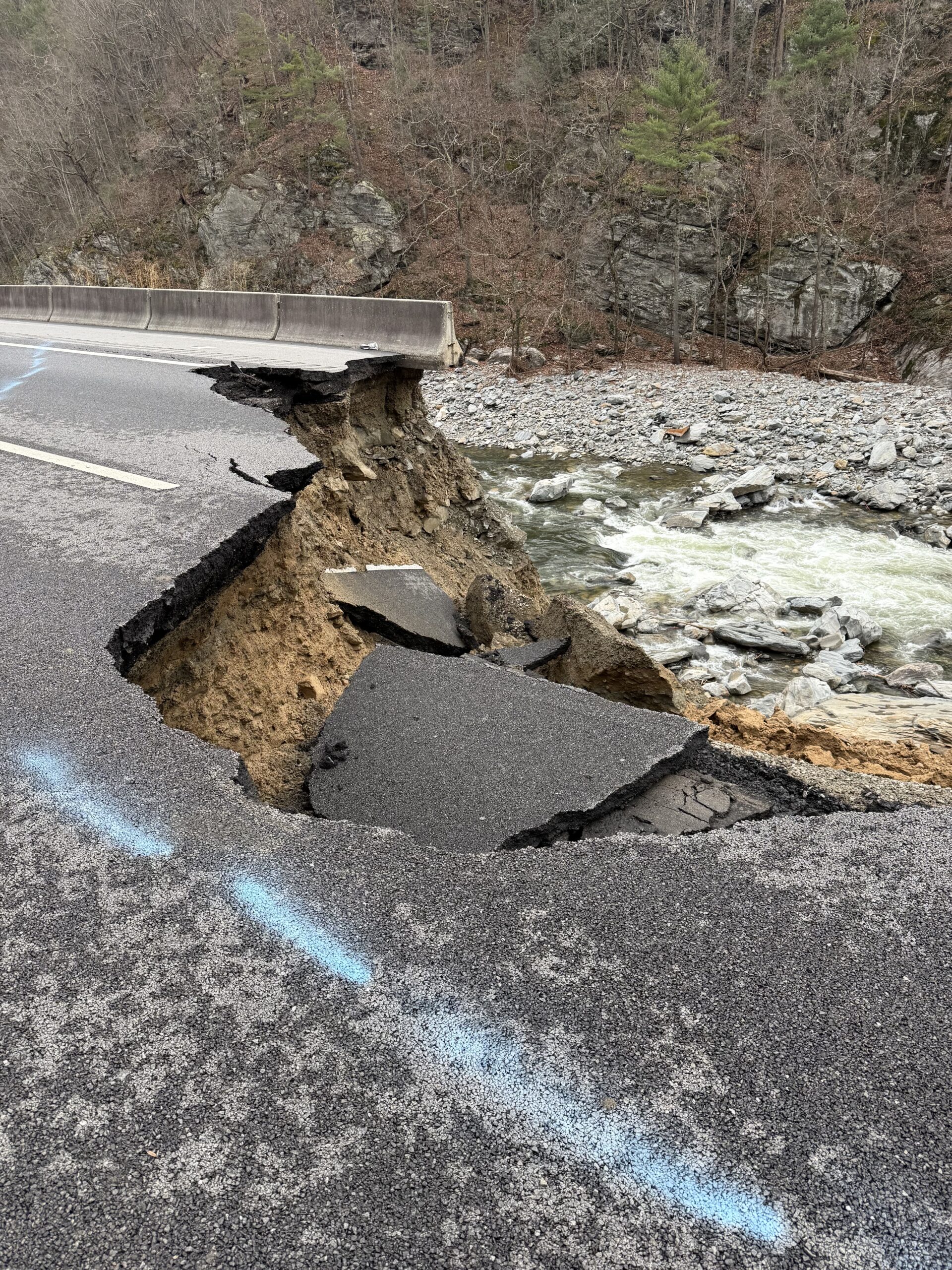

Erosion control problems occur when water movement removes soil, undermines support, and destabilizes slopes, embankments, and critical infrastructure. Some erosion develops slowly through seepage and internal soil loss beneath the surface, while other failures occur rapidly during storm events when runoff, flooding, or high-velocity flow strips material away in a matter of hours. In both cases, erosion can expand quickly once it starts, reducing stability and increasing the risk of settlement, collapse, and access loss.
Because water-driven soil loss often affects areas that are difficult to access or repair with conventional earthwork, early evaluation is key to limiting damage and preventing repeat failures. Effective erosion control typically requires addressing both the ground conditions and the water source, whether that means controlling seepage, restoring support, or reinforcing high-risk flow paths.
Explore the erosion control conditions below to better understand common failure drivers, warning signs, and engineered stabilization approaches, including seepage and internal erosion problems and washouts or scour damage that threaten long-term corridor reliability.
If you’re dealing with persistent seepage, soft ground, or washout damage after storms, GeoStabilization International can help. Share a few details about what you’re seeing on site, and a stabilization specialist will follow up to discuss practical next steps.